
Devenia Learn / Dictionary
Website purpose
A website purpose is the most important result the site is designed to achieve, such as qualified enquiries, sales, bookings, education, or support.
Start with email. Share the page or your question, and we will answer clearly.
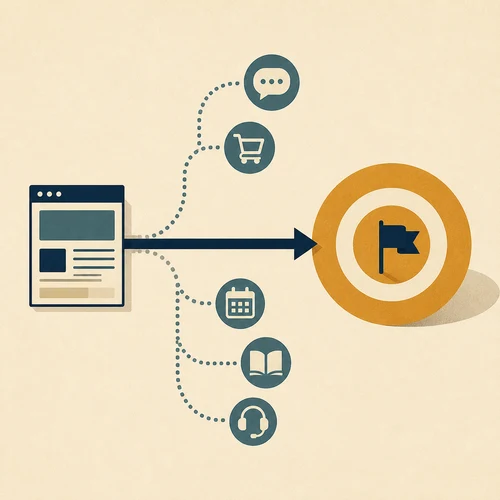
Name what the visitor should accomplish.
For a bakery taking celebration-cake orders, a useful purpose could be: help local customers choose a suitable cake and request it for a specific date.
That statement tells you more than “make the bakery look professional”. It points to cake examples, sizes, price guidance, lead times, and an order enquiry.
Turn the purpose into page decisions
1. Write one concrete outcome
Help local customers request a celebration cake for their date. Name the customer and the task in the same sentence.
2. Choose what comes first
Give cake enquiries the strongest emphasis. Keep opening hours and directions easy to find for people visiting the shop.
3. Give each page a job
Cake examples help customers choose a style. Size guidance helps them order enough portions. The enquiry form gathers the date and requirements.
4. Check the complete action
Submit a test enquiry. Check that the bakery receives the details and that the customer understands when the order is confirmed.
Measure the completed task.
For this bakery, useful measures include enquiries with enough detail to answer and orders the bakery accepts. A click on “Enquire” is only an intermediate step.
Read the enquiries as well as counting them. If customers repeatedly ask about portions or lead times, improve that information on the page.
Common questions about website purpose
Back to the dictionary.
Can a website have more than one purpose?
Yes. A bakery may take cake enquiries, show shop hours, and recruit staff. Give each audience a clear route. The main purpose helps you decide what deserves the most space and attention.
How do I choose the primary purpose?
Identify the customer task the site most needs to support. Check it against the business’s capacity: a bakery that cannot take online payments may need an enquiry and confirmation process rather than an immediate purchase.
What if the site is for information or support?
Define what the reader should understand or complete. A cake-storage guide can succeed when someone finds the right storage instructions. It does not need to end with a sales form.
Does every page need the same button?
No. Match the next step to the page. A cake gallery may lead to an enquiry; a directions page may open a map. Both can support the same business without using identical actions.
When should I review the purpose?
Review it when the service, audience, or way of ordering changes. Check customer questions and completed tasks too: they can reveal that the site is helping with a different need than you expected.
Is the site helping people do the right thing?
Send the website and one sentence naming its audience and intended task. We can compare that purpose with the information and actions visitors find.